
How to Move to Idaho: A Step-by-Step Relocation Checklist (2026)
Reviewed by Garrett Pancheri and Dustin Cagle
Team Leaders, Living In Idaho | LPT Realty
View Profile
To move to Idaho, start by setting your budget and target region, get mortgage pre-approval, line up a local real estate agent, plan the logistics of your move, and handle residency tasks like your driver's license and vehicle registration once you arrive. Most relocating buyers do best when they treat the home search and the physical move as two parallel tracks that need to sync on timing. This checklist walks through both, in order.
Interested in moving to Idaho? Explore: Homes for sale in Idaho | Idaho communities | Idaho Affordability Calculator
Idaho Relocation Quick Facts
| Fact | Detail |
|---|---|
| State population (2025) | About 2,029,733 residents |
| Median home sale price | Roughly $490,757 statewide |
| Average 2-bedroom rent | About $1,410 (Fair Market Rent) |
| Residency deadline | License and registration within 30 days |
| Homeowner exemption | 50% of value, up to $125,000 |
| Largest cities | Boise, Meridian, Nampa |
Quick Answer: How Do You Move to Idaho?
To move to Idaho, set your budget and target region, get mortgage pre-approval, hire a local relocation agent, search with MLS alerts and video tours, then plan a focused visit to make your offer. After closing, handle residency tasks like transferring your driver's license, registering vehicles, and filing for the homeowner's exemption. The key is running the home search and the physical move as two parallel tracks that sync on your closing date.
Key Takeaways
- Run two tracks at once: the home search and the physical move must sync on the closing date.
- Pre-approval is non-negotiable in a market where strong homes sell fast.
- A local relocation agent offsets the from out of state disadvantage — remote tours, off market leads, local timing.
- Plan one focused visit to tour finalists rather than many casual trips.
- Don't forget residency tasks — license, registration, and the homeowner's exemption after you close.
Table of Contents
- Quick Answer
- Key Takeaways
- Step 1: Set Your Budget and Region
- Step 2: Get Pre-Approved
- Step 3: Choose a Local Agent Who Knows Relocation
- Step 4: Search Smart from Out of State
- Step 5: Plan the Physical Move
- Step 6: Handle Idaho Residency Tasks
- How to Move to Idaho: Relocation Timeline at a Glance
- Frequently Asked Questions
- Conclusion
Step 1: Set Your Budget and Region
Before anything else, decide two things: what you can spend and which part of Idaho fits your life. The Treasure Valley (Boise, Meridian, Nampa, Caldwell, Eagle, Star, Kuna) draws most newcomers for jobs and amenities; North Idaho (Coeur d'Alene) and eastern Idaho (Idaho Falls) appeal to buyers wanting lakes, forests, or proximity to the Tetons.
Factor the full cost picture, not just the mortgage — property taxes, utilities, and Idaho's grocery sales tax all matter. Our cost of living in Idaho guide covers this in detail.
Choose your region around commute, budget, and lifestyle priorities — the practical factors that actually drive satisfaction.
Step 2: Get Pre-Approved for a Mortgage
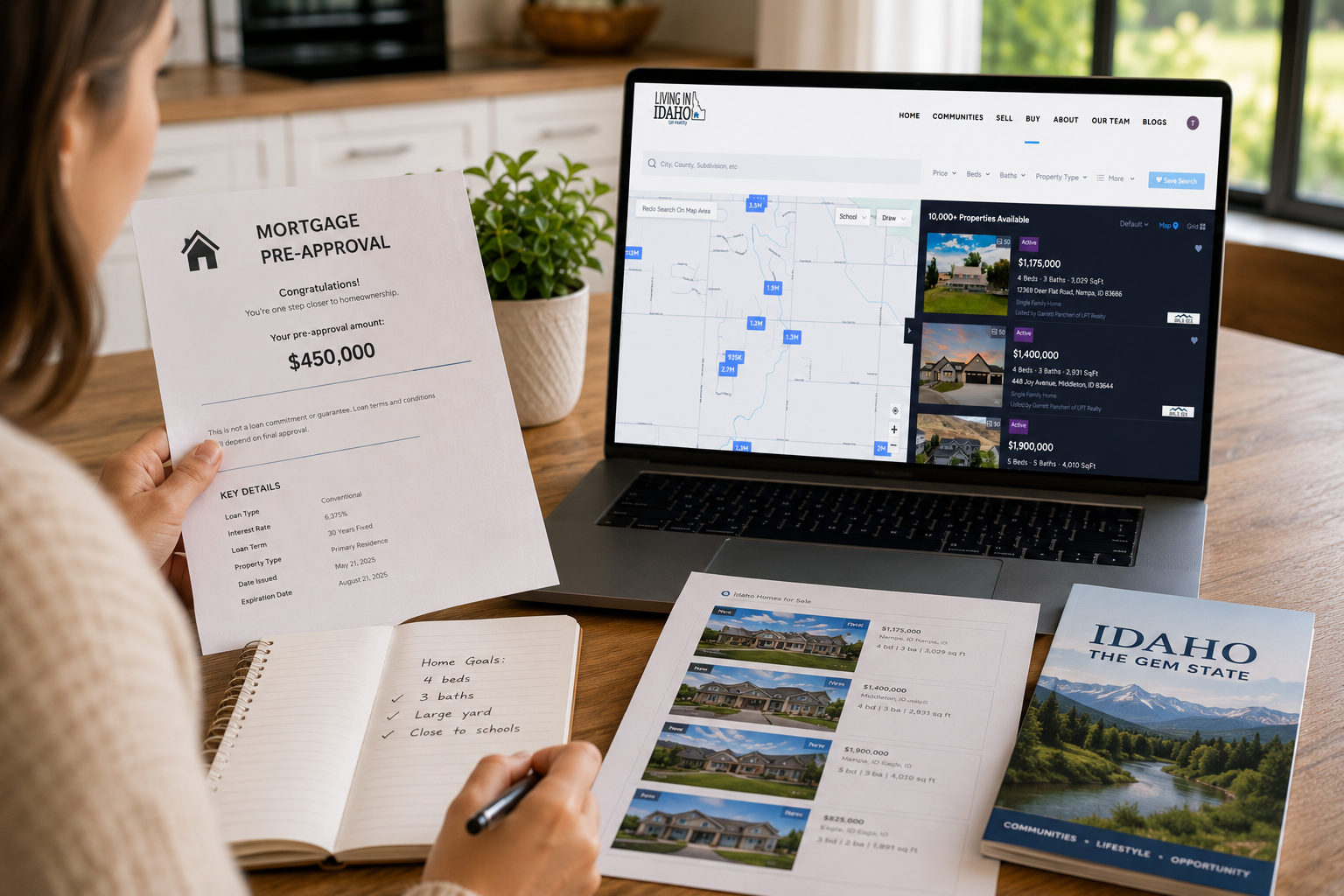
In a market where good homes move quickly (the U.S. Census Bureau ranked Idaho #1 in the nation for housing unit growth every year from 2020 to 2025), pre-approval is your entry ticket, not a formality. It tells you your true budget and signals to sellers you're ready. Talk to a lender familiar with Idaho, and ask specifically about:
- Loan types you may be eligible for (conventional, FHA, VA, USDA rural)
- Idaho Housing first-time buyer programs, if applicable Idaho Housing offers down payment assistance of up to 8% of the sales price, letting qualified buyers contribute as little as $500 of their own funds.
- How relocation or remote work income is documented
Step 3: Choose a Local Agent Who Knows Relocation
A buyer relocating from another area is at a real disadvantage without local eyes. A Treasure Valley agent who handles relocation can track new construction, flag off market activity, and tour homes on your behalf via video. This is where working with a specialist like Garrett Pancheri — who focuses on relocation, new construction, and acreage — or Dustin Cagle pays off directly.
Ask any agent: How many relocating buyers have you helped? How do you handle remote tours and offers? What's your read on current inventory in my target areas?
Step 4: Search Smart from Out of State
Relocating buyers who succeed treat the search methodically:
- Set up MLS alerts for your criteria so you see homes the day they list.
- Do video tours for anything promising — don't wait for an in person trip.
- Plan one focused visit to tour finalists and get a feel for neighborhoods, commutes, and school boundaries.
- Be ready to act. Have your pre-approval, earnest money, and decision process set before you find "the one."
Step 5: Plan the Physical Move
Logistics to lock down:
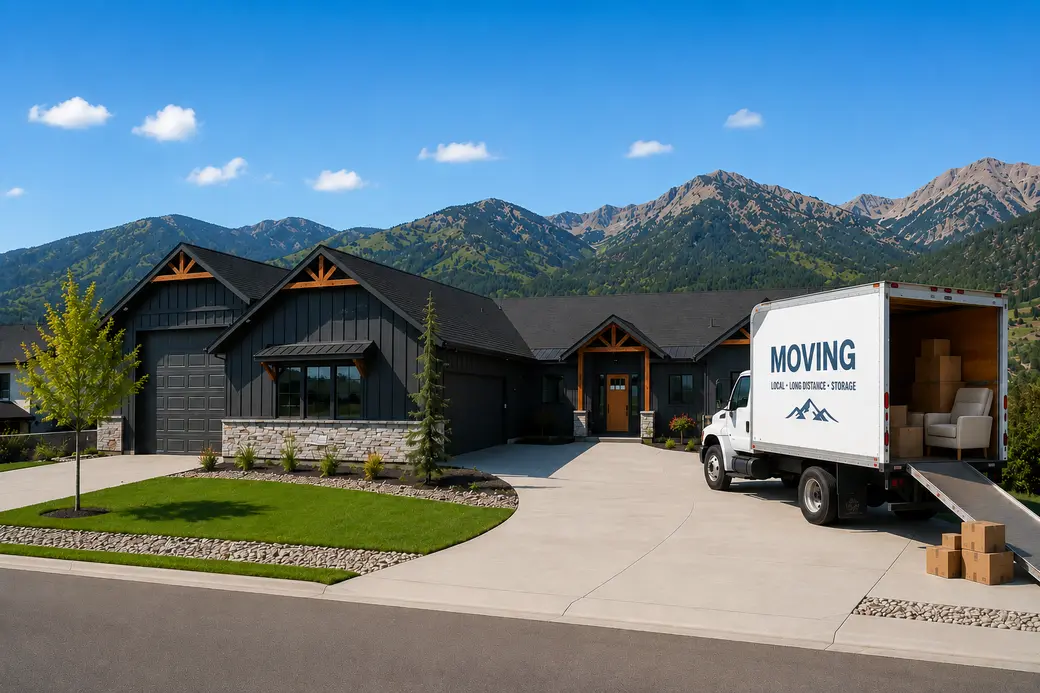
- Movers vs. DIY: Get quotes early; long distance moves book out, especially in summer peak season.
- Timing: Coordinate your closing date with your move-out and moving truck schedule.
- Utilities: Set up electric, gas, water, internet, and trash before arrival.
- Weather: Avoid scheduling a winter mountain move without a plan for snow and mountain passes.
Step 6: Handle Idaho Residency Tasks
After you arrive, Idaho gives new residents a window to become official. Typical tasks:
- Driver's license: Transfer to an Idaho license within 30 days of moving, per the Idaho Transportation Department.
- Vehicle registration: Title and register your vehicles within 30 days of moving.
- Voter registration: Update your registration.
- Homeowner's exemption: If you bought a primary residence, file for Idaho's homeowner's exemption, which reduces the taxable value of an owner-occupied primary residence. For eligible homeowners, Idaho’s homeowner’s exemption generally removes 50% of a primary home’s assessed value from taxation, up to $125,000, with applications typically filed with your county assessor by April 15.
Get My Free Homebuyer Strategies
Prefer to talk first? Call or Text (208) 586-3066
How to Move to Idaho: Relocation Timeline at a Glance
Information Table: Idaho Relocation Timeline
| When | Focus | Key actions |
|---|---|---|
| 2–3 months out | Plan | Set budget, pick target region, get pre-approved |
| 1–2 months out | Search | Hire local agent, MLS alerts, video tours |
| 3–6 weeks out | Decide | Visit, make offer, go under contract |
| 2–4 weeks out | Logistics | Book movers, set utilities, confirm closing date |
| Move week | Execute | Close, move in, start utilities |
| First 30–90 days | Residency | License, registration, voter, homeowner's exemption |
Frequently Asked Questions
How do I move to Idaho step by step?
Weigh the pros and cons, then set your budget and target region, get mortgage pre-approval, hire a local agent, search using MLS alerts and video tours, plan a focused visit to make an offer, then handle the physical move and residency tasks like your license and homeowner's exemption after closing.
How long does it take to establish residency in Idaho?
New residents are generally expected to obtain an Idaho driver's license and register vehicles within a set window after moving. New residents must obtain an Idaho driver’s license and register vehicles within 30 days of moving. For voting and the homeowner's exemption, you handle those once you've established your primary residence.
Can I buy a home in Idaho before I move there?
Yes. Many relocating buyers purchase before arriving by using a local agent for video tours, getting pre-approved, and closing remotely or during a short visit. Being pre-approved and decisive is key, since competitively priced homes move quickly.
What's the best time of year to move to Idaho?
Late spring through early fall offers the easiest weather and the most active housing inventory, though it's also peak moving season, so book movers early. Winter moves are possible but require planning around snow and mountain passes.
Do I need a real estate agent to move to Idaho?
You're not legally required to, but in a competitive, fast moving market, a local agent is a practical advantage — especially for from out of state buyers who need remote tours, local market reads, and help acting quickly on the right home.
How long does it take to move to Idaho?
A typical Idaho relocation takes about two to three months from planning to move-in: 2–3 months out for budgeting, pre-approval, and choosing a region; 1–2 months out for the agent guided search; and the final weeks for the offer, closing, and physical move. Buyers who are pre-approved and decisive can move faster, since competitively priced Treasure Valley homes sell quickly.
This article is for general informational purposes only and is not tax, legal, or financial advice. Tax rules, exemptions, and program terms can change and depend on your individual circumstances — confirm current details with the relevant Idaho agency or a qualified professional before making decisions.
Conclusion
Moving to Idaho is very manageable when you treat it as two coordinated tracks — securing the home and executing the move — anchored by a realistic budget and a local expert. Get pre-approved, lean on someone who knows the market, plan one focused visit, and keep the residency checklist handy for your first few months.
Ready to start? A local relocation specialist like Garrett Pancheri or Dustin Cagle can map your timeline, set up listing alerts, and tour homes on your behalf so you're ready to move when the right one appears.
Categories
Recent Posts








Leave a Reply