
Pros and Cons of Living in Idaho (2026 Guide)
Reviewed by Garrett Pancheri and Dustin Cagle
Team Leaders, Living In Idaho | LPT Realty
View Profile
Living in Idaho means trading big-city density for open space, lower overall taxes, and fast access to the outdoors — while accepting a housing market that has climbed sharply, seasonal weather swings, and long drives between towns. For people relocating from California, Washington, or the Northeast, the biggest pros are cost-of-living relief and lifestyle; the biggest cons are the tight housing inventory and adjusting to a slower pace. This guide breaks down both sides honestly so you can decide if Idaho fits your plans.
Interested in moving to Idaho? Explore: Homes for sale in Idaho | Idaho communities | Affordability Calculator
Quick Answer: What Are the Pros and Cons of Living in Idaho?
Idaho is a strong fit for people who want outdoor access, a lower overall tax burden (including no tax on Social Security benefits), and a slower-paced, community-scale lifestyle. The main trade-offs are rising home prices, competitive housing inventory, four distinct seasons with cold valley winters, and long drives between regions. For most buyers relocating from California, Washington, or the Northeast, the cost and lifestyle gains outweigh the adjustments — if they prepare for a fast-moving market.
Key Takeaways
- Taxes: Idaho does not tax Social Security benefits and carries a below-West-Coast overall tax burden, though a statewide sales tax applies to groceries (partly offset by a grocery tax credit).
- Housing: Home prices are lower than West Coast markets like Seattle, Portland, and the Bay Area, but have risen sharply within Idaho and inventory stays competitive in the Treasure Valley.
- Outdoor lifestyle: Treasure Valley residents can reach foothills trails, the Boise River, and Bogus Basin ski area within about 15–45 minutes of many Boise-area homes.
- Climate: Idaho has four distinct seasons, including hot, dry summers and cold winters with valley inversion fog — a notable adjustment for buyers from mild coastal climates.
- Buyer strategy: Mortgage pre-approval and a local relocation agent matter more in Idaho's fast-moving market, where well-priced homes near strong school boundaries sell quickly.
Table of Contents
- Quick Answer
- Key Takeaways
- Idaho at a Glance
- The Pros of Living in Idaho
- The Cons of Living in Idaho
- Pros and Cons Side-by-Side
- Is Idaho the Right Fit for Your Priorities?
- Cost of Living Reality Check
- Frequently Asked Questions
- Conclusion
Idaho at a Glance
Idaho has been one of the fastest-growing states in the country for several years, and most of that growth has landed in the Treasure Valley — the Boise metro that includes Meridian, Nampa, Caldwell, Eagle, Star, and Kuna. According to the U.S. Census Bureau, Idaho recorded the highest annual growth in housing units of any state from 2020 through 2025, including a 2.1% increase between July 2024 and July 2025 — a direct reflection of how fast the state is building to keep up with demand.
The appeal is easy to summarize: you get four real seasons, mountains and rivers within an hour of most cities, no state tax on Social Security benefits, and home prices that — while no longer cheap — still undercut the West Coast metros many newcomers are leaving.
Local insight from the ground: the single most common surprise we hear from relocating buyers isn't the weather or the taxes — it's how quickly well-priced homes move within sought-after school boundaries and near the Boise Greenbelt. Preparation beats speed here.
The Pros of Living in Idaho
1. Lower Overall Tax Burden
Idaho does not tax Social Security benefits, and its combined state-and-local tax load tends to run below the West Coast states most newcomers arrive from. Idaho levies a flat state income tax and a statewide sales tax that also applies to groceries, though the state offers a grocery tax credit to offset it. Idaho charges a flat 5.30% state income tax and a 6.00% state sales tax (about 6.03% combined with local taxes), according to the Tax Foundation. For retirees and remote workers moving from higher-tax states, this is often the line item that makes the math work.
2. Outdoor Access That's Genuinely Everyday
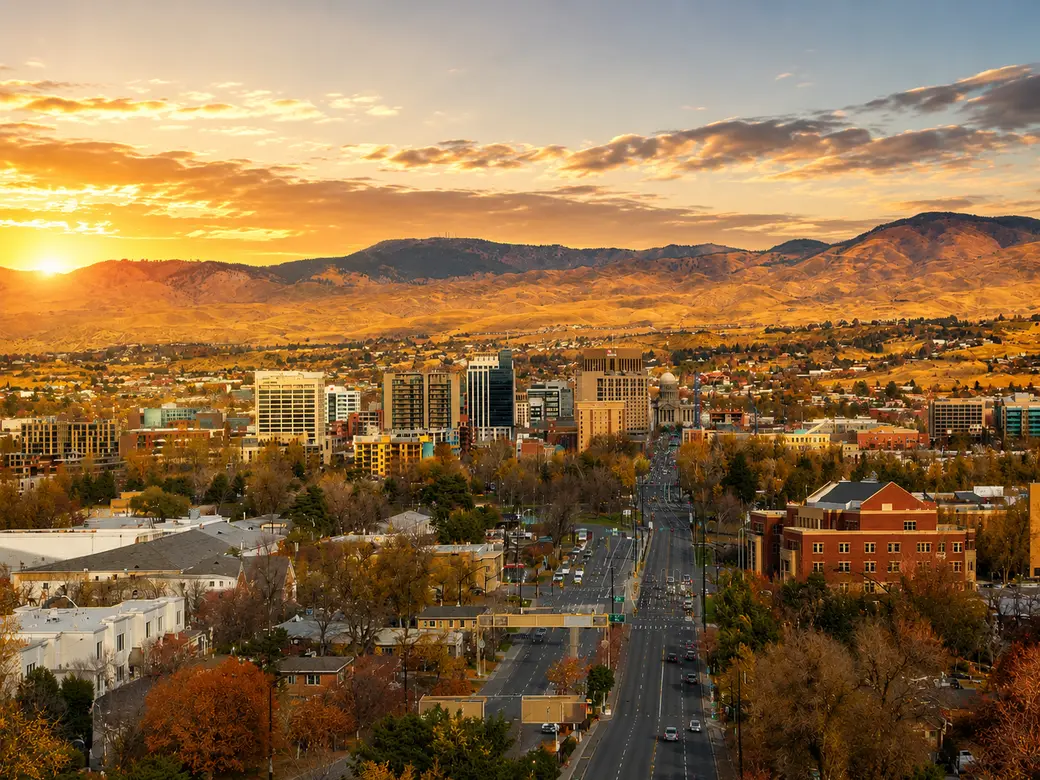
This isn't a marketing cliché in Idaho — it's logistics. From downtown Boise you can be on a foothills trail in 15 minutes, floating the Boise River in summer, or at Bogus Basin ski area in about 45 minutes. Shoshone Falls near Twin Falls, the Sawtooths near Stanley, and the lakes of North Idaho anchor a state built around getting outside.

3. Cost of Living Relief (Relative to Where People Come From)
Compared with Seattle, the Bay Area, or Southern California, day-to-day costs and housing are lower. That said, "affordable" is relative — see the cost reality check below, because locals and newcomers experience these numbers very differently.
4. Strong Job and Business Growth
The Treasure Valley has diversified well beyond agriculture into tech, healthcare, and manufacturing, with major employers like Micron anchoring the region. The Idaho Department of Labor reports the state added 190,610 residents from 2020 to 2025 (10.4% growth, fastest in the nation), with much of that concentrated in the Treasure Valley’s Ada and Canyon counties.
5. A Genuine Sense of Community
Smaller-city scale means shorter commutes, recognizable downtowns, and active local events — the Boise Farmers Market, the Meridian and Eagle summer events, and a downtown Boise that stays walkable and lively. For a wider look at daily life, see our overview of whether Idaho is a good place to live.
The Cons of Living in Idaho
1. Home Prices Have Climbed Fast
The hardest adjustment for many buyers. Rapid in-migration pushed Treasure Valley prices up substantially over recent years. As of June 2026, the median listing price in the Boise metro was about $625,000 (Federal Reserve/FRED data). Homes are cheaper than the coast but far pricier than Idaho's own recent past — which shapes local sentiment. From helping buyers relocate to the Treasure Valley, local agents consistently see sticker relief from California and Washington arrivals, paired with genuine surprise from long-time Idahoans watching prices outpace local wages.
2. Inventory Can Be Tight and Competitive
Well-located, well-priced homes — especially near strong school boundaries or the Greenbelt — can move quickly. Relocating buyers who aren't pre-approved and ready often lose out. Working with a local agent who tracks new construction and off-market activity matters more here than in a slower market. One common question we hear from relocating buyers is whether they can compete from out of state — the answer is yes, but usually only with pre-approval in hand and a local agent touring on their behalf.
3. Real Seasons Mean Real Winter
Idaho gets four distinct seasons. Treasure Valley winters bring cold, fog ("freezing fog" inversions in the valley), and occasional snow; the mountains and North Idaho get significantly more. Summers run hot and dry. If you're coming from a mild coastal climate, budget for the adjustment.
4. Distances Between Places Are Real
Idaho is large and geographically split. Boise to Coeur d'Alene is roughly a full day's drive, and mountain terrain shapes routes. Rural living often means longer drives for specialized healthcare, airports, and big-box shopping.
5. Growing Pains
Fast growth brings more traffic on I-84, road construction, and school-capacity pressures in booming areas like Meridian, Kuna, and Star. Buyers weighing these suburbs often compare them in our best places to live in Treasure Valley guide. Newcomers sometimes underestimate how much the region is still building to catch up.
Pros and Cons Side-by-Side
Data Table: Living in Idaho — Advantages vs. Challenges by Category
| Category | Advantage | Challenge |
|---|---|---|
| Housing | More affordable than many West Coast markets | Rising prices and limited inventory |
| Weather | Four distinct seasons with sunny, dry summers | Winter valley fog and cold temperatures |
| Lifestyle | Everyday outdoor recreation and community feel | Fewer big-city amenities and longer drives |
| Taxes | Social Security benefits are not taxed | Sales tax applies, including to groceries |
| Economy | Diversified, growing Treasure Valley job base | Wage growth still catching up to home prices |
Information Table: Idaho Pros vs. Cons at a Glance (Detailed)
| Factor | The Pro | The Con |
|---|---|---|
| Taxes | No tax on Social Security; below-coast burden | Sales tax applies to groceries (a grocery tax credit partly offsets this) the state sales tax of 6% applies, offset by a food tax credit of $155 per person |
| Housing cost | Cheaper than West Coast metros | Sharp local price increases; tight inventory |
| Outdoors | Trails, rivers, skiing within an hour | Wildfire smoke can affect late-summer air |
| Pace of life | Less congestion, real community | Fewer big-city amenities; some drive time |
| Climate | Four true seasons, sunny summers | Cold/foggy winters, hot dry summers |
| Economy | Diversified, growing job base | Wage growth still catching up to home prices |
Is Idaho the Right Fit for Your Priorities?
To stay firmly on the right side of fair housing, this is framed around priorities and logistics, not who "belongs":
- If your priorities are outdoor access, lower taxes, and a shorter commute, Idaho lines up well.
- If your priorities are big-city nightlife, extensive public transit, or a mild year-round climate, you may find Idaho an adjustment.
- If you're buying on a fixed budget, run the numbers carefully — the tax picture helps, but housing costs are the variable that decides it.
Idaho welcomes all buyers equally; the questions above are about lifestyle fit and budget, not background.
Cost of Living Reality Check
The nuance most guides miss: Idaho feels affordable to people moving in and expensive to people who already live here. A buyer relocating from San Jose sees relief; a lifelong Idahoan sees prices that outpaced local wages. The National Low Income Housing Coalition illustrates the gap: affording the average two-bedroom rent in Idaho required an hourly Housing Wage of about $27.12 in 2026, while common local jobs like retail (around $17.34/hour median) pay well below that. Both are true. Based on conversations with Idaho homebuyers, the newcomers who adjust best are the ones who budget for the full cost picture — property taxes, utilities, and grocery sales tax — not just the mortgage. For a full breakdown of housing, utilities, groceries, and the costs newcomers forget, see our detailed guide on the cost of living in Idaho.
Get My Free Homebuyer Strategies
Prefer to talk first? Call or Text (208) 586-3066
Frequently Asked Questions
Is Idaho a good place to live?
Yes, for many relocating buyers Idaho is a good place to live — Idaho offers lower taxes than the West Coast, everyday outdoor access, and a strong community feel. The main trade-offs are a competitive housing market, four-season weather, and longer distances between regions. Whether it's "good" depends on your budget and lifestyle priorities.
What are the biggest downsides of living in Idaho?
The most cited downsides are home prices that have risen quickly, tight housing inventory, cold and sometimes foggy valley winters, and the driving distances across a large state. Fast growth has also added traffic and school-capacity pressure in booming Treasure Valley suburbs.
Is it cheaper to live in Idaho than California or Washington?
Yes — for most relocating buyers Idaho is cheaper than California or Washington, especially on housing and overall tax burden, which is why many buyers relocate from those states. However, "cheaper" is relative to where you're coming from — costs have risen meaningfully within Idaho itself. Idaho’s median household income runs roughly $77,800–$81,200 (U.S. Census Bureau), well below what the state’s elevated home prices require — the core of the local affordability squeeze.
Does Idaho have good weather?
Idaho's weather is defined by four distinct seasons: warm-to-hot dry summers, colorful falls, cold winters with valley fog and mountain snow, and mild springs. People who enjoy variety and sunshine tend to like it; those wanting a mild year-round climate may find winter an adjustment.
Where do most people move when relocating to Idaho?
The Treasure Valley — Boise, Meridian, Nampa, Caldwell, Eagle, Star, and Kuna — draws the largest share of newcomers thanks to jobs, amenities, and airport access. North Idaho (Coeur d'Alene) and eastern Idaho (Idaho Falls) are also popular relocation destinations.
What are the main pros and cons of living in Idaho?
The main pros of living in Idaho are a lower overall tax burden (no Social Security tax), everyday access to outdoor recreation, and a community-scale lifestyle with shorter commutes. The main cons are rising home prices, competitive inventory, four-season weather including cold valley winters, and long distances between regions like the Treasure Valley and North Idaho.
This article is for general informational purposes only and is not tax, legal, or financial advice. Tax rules, exemptions, and program terms can change and depend on your individual circumstances — confirm current details with the relevant Idaho agency or a qualified professional before making decisions.
Conclusion
Idaho's appeal is real and specific: lower taxes, everyday access to the outdoors, and a community-scale lifestyle that's increasingly rare. The trade-offs are just as specific — a housing market that rewards preparation, four honest seasons, and the distances that come with a big, beautiful state. Weigh the pros and cons against your budget and priorities, and Idaho becomes an easy state to evaluate clearly rather than romanticize. In our experience guiding relocating buyers through the Treasure Valley, the households happiest with the move are the ones who visited, ran the numbers, and came in with clear priorities rather than a postcard image.
If you're weighing a move and want straight answers about neighborhoods, home prices, and the buying process, connect with our Treasure Valley real estate team, including Garrett Pancheri and Dustin Cagle, to talk through your specific situation before you start your search.
Leave a Reply