
What Is a Patio Home, and How Is It Different From a Townhouse?
Reviewed by Garrett Pancheri and Dustin Cagle
Team Leaders, Living In Idaho | LPT Realty | View Profile
Direct answer: A small single-story or one-and-a-half-story house on a compact lot, either detached or sharing one wall with a neighbor. It usually sits in a planned community where a homeowners association (HOA) handles some outdoor upkeep like lawn care or snow removal. Unlike a condo, you typically own both the house and the land under it.
1 to 1.5 Stories
The typical height of a patio home, with most daily living on the main floor
5 Business Days
How long an Idaho HOA has to provide a statement of your assessment account after a written request (Idaho Code 55-3205)
$0
What an Idaho HOA can charge for that account statement, under the same statute
What is a patio home? It is a smaller house on a smaller lot, usually one level, where the HOA takes some of the yard work off your plate. And no, the patio is not guaranteed. You will find them tucked into newer subdivisions across Meridian, Nampa, Kuna and Caldwell, usually next to bigger homes on bigger lots. We put this guide together for buyers relocating to Idaho who keep seeing "patio home" in listings and want to know what they are actually buying.
Find the right home type Homes for sale in Idaho | Idaho communities | Affordability Calculator
Quick Answer: What Is a Patio Home?
A compact, mostly single-level house on a small or zero-lot-line parcel, attached by one wall or fully detached, with a small yard or courtyard instead of a big lawn. Most sit in HOA communities. You usually own the home and the lot. How much of the outside the HOA handles depends on the covenants.
Key Takeaways
- Small and mostly one level: one story or one and a half, rarely two.
- You own the lot: unlike a condo, the land under the house is usually yours.
- The HOA is part of the deal: dues pay for some outdoor upkeep, and the rules come with it.
- Many names: garden home, cluster home, courtyard home, villa and sometimes carriage home.
- Read the covenants: they decide what the HOA covers, what you can change and whether the community is age-restricted.
What Is a Patio Home, Exactly?
Here is the honest answer: there is no legal definition. "Patio home" is a description builders and listing agents use, so two patio homes across town can look pretty different.
Most of them share a pattern, though. One story, sometimes with a loft or bonus room upstairs. A small lot, often zero-lot-line, which means the house sits right on or very close to one property line. Either one shared wall or a few feet of side yard between you and the next house. You usually own it fee simple, meaning the house and the dirt under it. And there is almost always an HOA.
Because the label is loose, the paperwork matters more than the listing headline. The plat and the covenants tell you what you actually own. The headline tells you what the marketing team liked.
Why Are They Called Patio Homes?
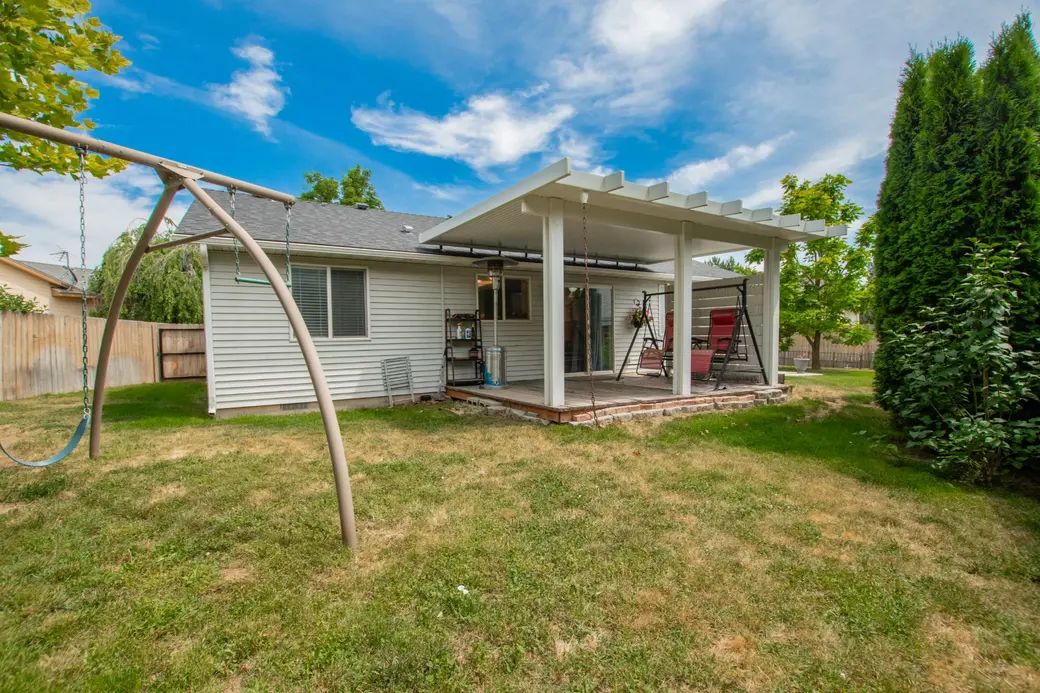
The idea is the outdoor space. Instead of a big front and back lawn, these homes are built around a small private patio, courtyard or garden area. Less grass, more sitting.
That said, the name is a style, not a promise. Some patio homes have a generous covered patio. Others have a slab of concrete big enough for two chairs and a grill. Walk out back before you fall for the name.
Patio Home vs. Townhouse, Condo and Duplex
These get mixed up all the time. The difference almost always comes down to two things: how many stories, and what you actually own.
A townhouse is usually two or more stories in a row, with shared walls on one or both sides. A patio home is lower, usually one level, with one shared wall at most.
A condo is about ownership. You own the inside of your unit, and the association owns the land, roof and exterior walls. With a patio home, the structure and the lot are usually yours.
A duplex is one building with two homes, often on one lot. An attached patio home can look exactly the same from the street, but each side is usually its own lot with its own owner. And a detached patio home skips the shared wall entirely. Same small lot, same HOA, just a narrow side yard in between.
What Does the HOA Actually Cover?
This is the question that matters most, and the answer is always "it depends on the covenants."
Some patio home HOAs only take care of common areas and front landscaping. Others handle mowing, snow removal and even exterior paint or roof replacement. More coverage usually means higher dues. Neither setup is better. You just need to know which one you are buying.
We are not going to tell you what dues should be. Every HOA is different, and that is the whole point of asking. Insurance works the same way. If the HOA's master policy covers the exterior, your own policy may need less. If it does not, you insure the whole structure yourself. Hand the covenants and the HOA's insurance summary to your insurance agent before you close, not after.
What Idaho Law Says About HOA Fees
Most buyers never ask for these. You should.
Idaho's Homeowner's Association Act gives owners real tools. Under Idaho Code section 55-3205, the HOA has to put its fees in writing every year, has to hand over account and financial information on request within set deadlines, and cannot charge a transfer fee unless the covenants say it can. It also cannot charge you for the account statement. The exact deadlines are in the HOA facts table below.
Your agent can work with the seller to get these numbers before you are locked in. A healthy HOA is not shy about its finances.
Are Patio Homes Age-Restricted?
Some are. Most are not. The home type itself has no age rule.
A community can only operate as 55-and-older housing if it meets the federal requirements HUD explains in its guide to housing for older persons under the Fair Housing Act. That includes at least 80 percent of occupied units having at least one resident 55 or older, plus published policies showing that intent. Everywhere else, the same homes are open to every buyer. The covenants tell you which kind of community you are looking at.
Pros and Cons of Patio Homes
The upside is simple. Most daily living happens on one floor. A small lot plus HOA landscaping means more free weekends. With the outside handled, leaving town for a few weeks is easier. And unlike a condo, you usually own the dirt.
The downside is just as simple. You pay dues, and you live by the HOA's rules on fences, paint colors and additions. A shared wall or a five-foot side yard means your neighbors are close. And between the small lot and the rules, there is not much room to add on later. If you already know you will want a shop or a bigger yard, this is probably not the house.
What to Check Before You Buy
- Read the covenants (CC&Rs): what the HOA maintains, what you maintain, and any age restriction.
- Ask about the shared wall: who repairs the wall and roof where two homes meet.
- Get the HOA's numbers: dues, the fee disclosure, any transfer fee and recent special assessments.
- Check the outdoor rules: patio covers, fences and hot tubs often need approval.
- Inspect it anyway: HOA exterior care is not a home inspection. Have the roof, foundation and any shared wall checked.
- Compare the real monthly cost: mortgage plus dues, against a similar home without an HOA.
Weighing new construction too? Our guide to what a spec house is covers quick move-in homes, and plenty of them are patio homes. For the bigger picture, see the best places to live in Idaho.
| Feature | Patio Home | Townhouse | Condo |
|---|---|---|---|
| Typical stories | One to one and a half | Two or more | Varies by building |
| Shared walls | None or one | One or two | Often several, plus floors or ceilings |
| Who owns the land | Usually you | Usually you (small lot) | The association, shared |
| Exterior upkeep | Split with the HOA, per covenants | Mostly you, HOA for common areas | The association |
| Requirement | Deadline or Rule |
|---|---|
| Statement of assessment account | Within 5 business days of a written request, free |
| Updated financial disclosure | Within 10 business days of a request |
| Annual disclosure of fees | On or before January 1 each year |
| Year-end reconciled disclosure | Within 60 days after the fiscal year closes |
| Transfer fee | Only if the covenants expressly allow it |
Explore Homes and Communities in Idaho
Prefer to talk first? Call or Text (208) 586-3066
Frequently Asked Questions
Why do they call them patio homes?
The design trades a big lawn for a small private patio, courtyard or garden area. The name describes the style, so the actual patio can range from generous to barely there.
What is the difference between a townhouse and a patio home?
Townhouses are usually two or more stories in a row with shared walls on one or both sides. Patio homes are usually single level and either detached or attached on one side.
What is another name for a patio home?
You will see garden home, cluster home, courtyard home and villa. "Carriage home" is sometimes used too, though some builders use it for a unit built over a garage, so check the floor plan.
What is the difference between a condo and a patio home?
With a condo, you own the interior of your unit and share ownership of the land and exterior. With a patio home, you typically own the house and the lot it sits on.
What is a detached patio home?
A patio home with no shared walls. It has the same small lot and HOA setup, with a narrow side yard between homes.
Is a patio home the same as a duplex?
Not usually. A duplex is one building with two homes, often on one lot. Attached patio homes may share a wall, but each side is typically its own lot with its own owner.
Conclusion
A patio home trades size and yard for less upkeep, and you pay for that trade in HOA dues and rules. Whether it is a good trade comes down to the covenants. Read them, get the HOA's numbers and inspect the home before you commit. HOA rules and fees change, so confirm details with the association and your agent before you sign. Garrett Pancheri and Dustin Cagle at Living In Idaho are happy to walk any home with you. Worst case, you get a straight answer to what is a patio home and whether this one fits.
Categories
Recent Posts








Leave a Reply